

Portugal has confirmed its status as one of the fastest growing residential real estate markets in Europe. The country ranked second among the European Union countries in terms of annual house price growth, second only to Hungary. This result was a natural result of a long period of steady increase in the cost per square meter, supported by both domestic demand and continued interest from foreign investors.
Dynamics Of The Residential Real Estate Price Index
The National Institute of Statistics of Portugal (Instituto Nacional de Estatística) records a steady upward trajectory of the price index. The figures for 2025 and January 2026 show an acceleration in growth rates compared to previous periods.
Differentiation by type of objects:
|
Property Type |
Quarterly growth |
Annual growth |
|
Secondary housing |
+4,52 % |
+19,08 % |
|
New buildings |
+2,93 % |
+14,07 % |
The data indicate higher dynamics in the secondary market segment, which is typical for mature European markets with limited new construction opportunities in central areas.
Average Prices According To Banks' Estimates: Steady Double-Digit Growth
As of January 2026, the National Institute of Statistics has published data based on a bank assessment of housing. These indicators reflect the median cost per square meter and are one of the key indicators of the real market situation.
Key indicators for the end of January 2026:
As of January 2026, the National Institute of Statistics has published data based on a bank assessment of housing. These indicators reflect the median cost per square meter and are one of the key indicators of the real market situation.
Key indicators for the end of January 2026:
- The average house price reached 2,081 euros per square meter.
- Annual growth (December 2025 to December 2024) was 19.12%.
- Double-digit annual price growth has been recorded for fifteen consecutive months, which confirms the stability of the upward trend.
Regional Price Differentiation: From Metropolitan Areas To Inland Areas
The Portuguese real estate market is characterized by a significant gap in the cost of housing between coastal urbanized areas and inland regions. This differentiation has persisted over the years and reflects differences in economic activity, tourist attractiveness, and population density.
Regions with the highest average prices:
- Grand Lisbon (metropolitan area) - 3145 euros/sq.m. The absolute leader in housing costs, due to the concentration of business activity, developed infrastructure and high demand from both residents and international investors.
- Algarve — 2726 euros/sq.m. Prestigious southern region, traditionally attracting buyers due to its developed tourist infrastructure, climate and high quality of life.
- Setubal Peninsula — 2,520 euros/sq.m. The region adjacent to the metropolitan area is showing steady price growth, offering a more affordable alternative to Grand Lisbon while maintaining transport accessibility.
Regions with the lowest average prices:
- Alto Alentejo — 1,020 euros/sq.m
- Terrache de Thrache-us-Montis — 997 euros/sq.m
- Alto Tamega y Barroso — 984 euros/sq.m
These subregions, located in the interior of the country, remain the most accessible to buyers focused on a low entry threshold.
Comparative Dynamics Of The Segments: Apartments Vs Houses
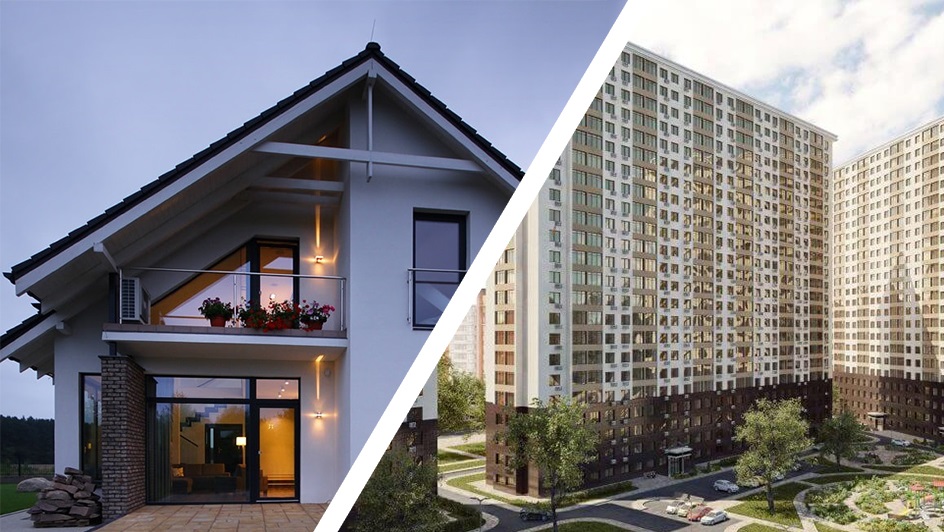
An analysis of the market structure shows a significant difference in price dynamics between multi-family and individual housing. The apartment segment is showing faster growth rates, reflecting the increased demand for compact formats in urban centers.
Apartments (January 2026):
- average price — 2,415 euros per square meter;
- annual growth — 23.09 %;
Houses (January 2026):
- average price — 1516 euros per square meter;
- annual growth — 14.67%.
The gap in growth rates between the two segments (more than 8 percentage points) indicates structural changes in the preferences of buyers, who are increasingly choosing apartments in urbanized areas as a more liquid and profitable asset.
Prices In The Largest Cities: Data For January 2026
|
City |
Estimation of the median cost of apartments by the bank, euro/sq. m |
Annual change |
Estimation of the median cost of houses by the bank, euro/sq. m |
Annual change |
|
4556 |
+14.91% |
4698 |
+13.42% |
|
|
3126 |
+15.91% |
3048 |
+32.06% |
|
|
Vila Nova de Gaia |
2361 |
+27.48% |
1877 |
+16.22% |
|
Braga |
1956 |
+21.26% |
1590 |
+9.35% |
|
Coimbra |
2174 |
+18.47% |
1436 |
+15.81% |
|
Funchal |
3028 |
+27.07% |
2277 |
+4.74% |
A Steady Trend With Regional Features
The Portuguese residential real estate market by the end of 2025 demonstrates the following key characteristics:
- Pan—European leadership is the second largest in the EU in terms of annual price growth.
- A long growth cycle — a double-digit annual price increase has been recorded for fifteen months in a row.
- The outstripping dynamics of apartments is an increase of 23.09% year—on-year against 14.67% in the segment of houses.
- Pronounced regional polarization — the gap between the most expensive region (Grand Lisbon, 3145 euros/sq.m.m) and the most affordable (Alto Tamega y Barroso, 984 euros/sq.m.m) is more than three times the value.
The presented data confirm the status of the Portuguese housing market as one of the most attractive for investors in Europe, combining high profitability with relative stability of the institutional environment.
Average House Sale Prices In Portugal: Data For January 2026
In addition to bank estimates of the median cost of housing, an important indicator of the real market situation is the prices of the properties actually put up for sale. These data allow us to assess not only the current price level, but also the expectations of sellers that form the supply in the market.
Nationwide Indicators
According to Idealista analytics, at the end of January 2026, the following indicators have developed:
- The average price of residential real estate for sale reached 3019 euros per square meter.
- Annual price growth at the national level was 6.79%.
This indicator complements the picture formed by the bank's estimates and demonstrates a steady positive trend in the supply market.
Price Dynamics In The Largest Cities
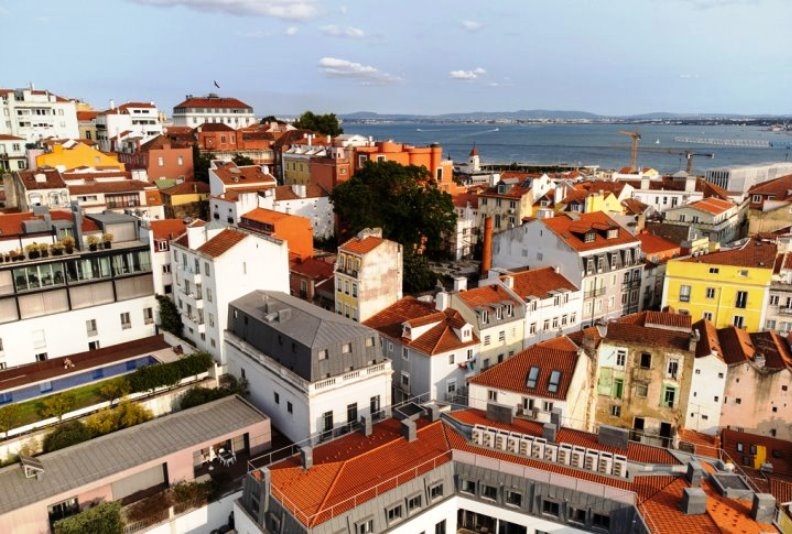
Below is data on the average selling prices of housing in the largest cities of Portugal, as well as annual growth rates in each of them. These data make it possible to assess regional differentiation and identify cities with the highest price dynamics.
|
City |
Estimation of the median cost of apartments by the bank, euro/sq. m |
Annual change |
|
Lisbion |
5995 |
+4.84% |
|
Porto |
3885 |
+4.86% |
|
Vila Nova de Gaia |
2820 |
+0.89% |
|
Braga |
2149 |
+8.81% |
|
Coimbra |
2256 |
+7.79% |
|
Funchal |
3861 |
+9.01% |
Fundamental Drivers Of The Portuguese Housing Market: Transaction Activity, Lending And Demand Structure
The steady increase in residential property prices in Portugal, recorded by the end of 2025, has a solid fundamental basis. The impressive price dynamics are driven by a complex of interrelated factors, among which high market activity, the availability of bank loans, and a stable demand structure dominated by local buyers play a key role. The analysis of data from the National Institute of Statistics of Portugal (INE) and the Bank of Portugal allows us to examine each of these drivers in detail.
Market Activity: The Number Of Transactions Reaches Record Levels
The main indicator of market intensity is the number of residential real estate purchase and sale transactions. According to the latest INE data for February 2026, the third quarter of 2025 showed the following indicators:
- The total number of transactions in the third quarter of 2025 was 42,481.
- Quarterly dynamics: a decrease of 0.95% compared to the second quarter of 2025 (slight correction within seasonal fluctuations).
- Annual dynamics: an increase of 3.84% compared to the third quarter of 2024.
Supply Structure: Stable Share Of New Housing
The distribution of transactions between the primary and secondary markets has remained stable over recent periods.
Key indicators:
- the share of new housing in the total volume of purchase and sale transactions:
- in 2024 — 20%;
- in the period from the first to the third quarter of 2025 — 20% (unchanged).
However, with the national average, there are significant regional differences in the proportion of new housing. These differences reflect the specifics of each region: the pace of new construction, urban planning constraints, investment activity of developers, and the structure of demand.
Demand Structure: Dominance Of Local Buyers
One of the most important factors for the sustainability of the Portuguese market is its reliance on domestic demand. The share of transactions made by Portuguese tax residents remains consistently high.
Distribution of transactions by buyer categories:
|
Customer category |
Share in transactions |
|
Portuguese tax residents |
95% |
|
Residents of other EU countries |
3% |
|
Third-country nationals (non-EU) |
2% |
During most of the analyzed periods, the share of local buyers was 94-95%. The exception was in 2022, when this figure dropped to 92% amid a surge in external investment demand.
The consistently high share of local buyers reduces the dependence of the market on external factors and makes it more predictable in terms of long-term dynamics.
Credit Availability: Lower Interest Rates As A Demand Catalyst
Bank lending is one of the key factors stimulating high activity in the market. After the peaks reached in the second half of 2023, mortgage interest rates have entered a phase of steady decline.
Dynamics of interest rates:
- The second half of 2023 is the achievement of maximum values.
- 2024-2025 is a steady downward trend in rates.
- December 2025 (data from BPstat, the Statistical Portal of the Bank of Portugal) — the average interest rate on new mortgages was 2.84%.
The reduction in interest rates has a complex impact on the market:
- increases the predictability of credit conditions for potential buyers;
- reduces the threshold of entry to the market for households;
- encourages the use of borrowed funds as the main instrument for financing purchases.
Growth In Lending Volumes
The growing interest in mortgages is confirmed by data from the European Central Bank (ECB) on the volume of loans granted to Portuguese households for the purchase of housing:
|
Period |
Lending volume |
Dynamics |
|
January–November 2025 |
25,95 billion euros |
— |
|
January–November 2024 |
~21,95 billion euros |
+4.0 billion euros |
The increase in loans issued by almost 4 billion euros compared to the same period of the previous year confirms that the availability of borrowed funds is becoming one of the main catalysts for continued high activity in the Portuguese residential real estate market.