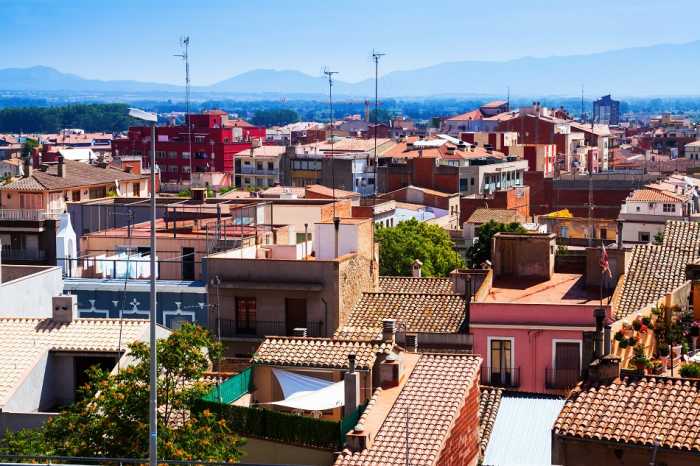



Even as momentum slows down elsewhere, Spain's house price rise is expected to continue to outpace that of its rivals for the remainder of the decade.
S&P Global predicts that until 2028, Spain will have the fastest-growing home prices of any significant European market. According to the rating agency's most recent European Housing Markets report, prices will increase by 9.3% this year, more than twice the European average, solidifying Spain's standing as the continent's best performer.
After 2026, growth is predicted to slow, but it will still be strong by European standards. Spanish home prices are predicted by S&P to increase by 6.2% in 2028 and 7.4% in 2027. Although there has been a noticeable slowdown, the market is still far ahead of the majority of its neighbors, many of whom are having difficulty recovering from the post-pandemic surge.
The S&P predicts price rise of 6.1% in 2025 and 4.3% in 2026 for all of Europe, indicating a slow cooling rather than a dramatic correction.
A Fragmented Image Of Europe
The report shows that the housing market in Europe is still very uneven. Countries like Portugal and Ireland have experienced faster price increases than expected, partly because their job markets have been strong and unemployment has reached record lows. On the other side, weaker job markets have affected prices in Sweden and the UK.
S&P also points to country-specific supply constraints. In Switzerland, housing supply remains effectively frozen. In Germany, high costs for materials and energy keep new building projects limited. The Netherlands suffers from both problems simultaneously. France is different for several reasons, and political instability is causing people to feel less confident about their finances, which is temporarily reducing consumer spending.
Even though the economy is growing more slowly and it's more expensive to borrow money, S&P says the main reasons why house prices are still going up are still strong and unchanged. More people are needing homes in Spain because there are more people, families are getting smaller, and people have more money saved up. At the same time, there aren't enough homes being built because of strict rules, slow approval processes, and a lack of workers in the construction industry.
One important finding from the report is that the number of households being formed is growing much faster than the overall population. In Europe, the number of households is growing about 2.5 times quicker than the total population, a trend that has been strengthened by changes in people's lifestyles since the pandemic. This helps explain why demand stays strong even in older societies where population growth is slow. These assets are less overvalued, but they are still not very cheap.
S&P also says that European housing markets are not as overpriced now as they were four years ago. In 2021–22, the ratio of prices to income went much higher than usual, suggesting that property values were overestimated by about 10% in the eurozone, 15% in the UK, and 20% in Sweden. A lot of that extra amount has been used up now.
Even though that's the case, Portugal and Switzerland still seem to be the most stretched markets. Their affordability is below both European and OECD average levels, and there's not much sign that this situation will improve soon. France and Belgium seem to be among the least valued, but S&P doesn't think this situation will last forever.
Implications For Spain
The implications for Spain are evident: robust fundamentals, constrained supply, and persistent demand are expected to drive prices upward at a rate that outpaces income growth for the time being. Given the limited potential for additional interest rate reductions from the European Central Bank, it is improbable that affordability challenges will diminish swiftly. For prospective buyers, this indicates a scarcity of favorable deals in the future; conversely, for property owners and sellers, sustained price support appears to be firmly established.