

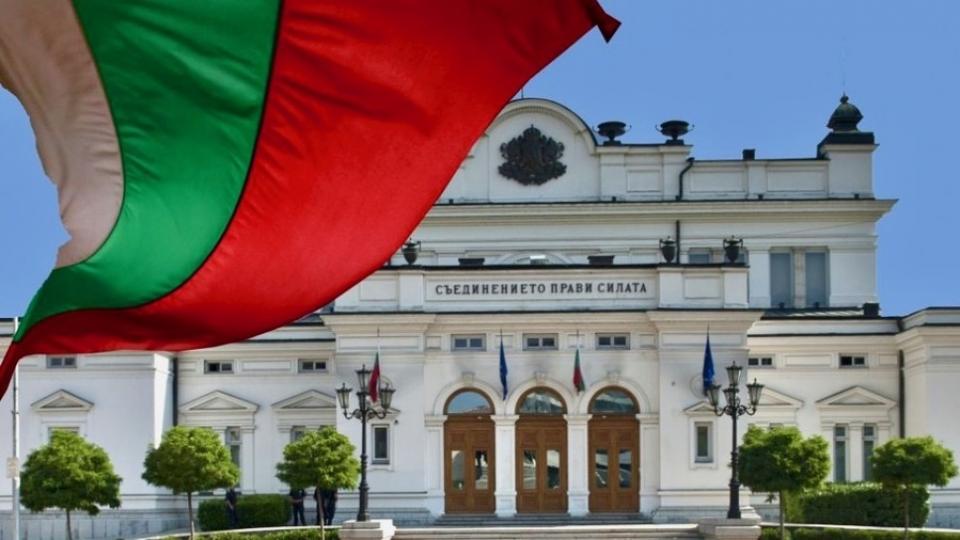
Bulgaria is preparing changes in migration legislation: the government has submitted to the National Assembly a draft law that changes the rules for maintaining permanent resident status. The essence of the innovations is to introduce the requirement of actual presence in the country: a foreigner will lose his status if he spent less than six months and one day in Bulgaria during a calendar year. The norm will also affect all property owners in the country, regardless of the method of its acquisition.
The project was approved by the Council of Ministers on July 27 (Resolution No. 575). The document was signed by Prime Minister Rumen Radev, along with a cover letter. On July 28, the bill was registered in the National Assembly under the number 52 602 01 29.
The changes will significantly affect the Golden Visa program. Currently, an investor can obtain a permanent residence permit by contributing 1 million leva (511,292 euros at a fixed exchange rate) to a special fund — and is not required to live in Bulgaria. The new rules actually change the logic: instead of the "absence rule" (which is almost impossible to break), the "presence rule" is introduced (which is difficult to comply with while abroad).
What Exactly Is Being Changed In The Law
Currently, paragraph 6 of Article 40 of the Law on Foreigners in the Republic of Bulgaria allows those who have been absent from the EU for 12 months in a row to be deprived of the right to reside. This rule applies to both holders of long-term and permanent residence permits. According to the Bulgarian Immigration Service (December 2025), this is exactly how the regulation is currently applied.
The bill rebuilds this system:
- Paragraph 6, after the changes, will apply only to long-term residence permits.
- For holders of a permanent residence permit, a new paragraph 24 is being introduced — it links the retention of status to the actual stay in Bulgaria, and not to absence from the EU.
Thus, for holders of permanent residence permits, two key conditions change at once.:
- The accounting area is being reduced from the entire EU to one country, Bulgaria.
- The criterion changes from "absence" to "presence": in order to maintain the status, you need to stay in the country for most of the year.
Thus, there is a possibility that a lot of cheap apartments in Bulgaria will appear on the market in the near future. Some investors may try to dump assets that will no longer allow them to have a residence permit in this country.
How Will This Affect Investors And Other Categories?
There are exceptions for investors in the current regulation: they are specified in paragraph 1 of article 25, paragraphs 6-8, 13 and 16, as well as in article 25g. In particular, article 25g sets out the conditions for practicing physicians separately (as of December 2025).
According to the draft, the exception to paragraph 6 remains, but only for long-term residence permits. It is not valid for holders of an exclusively permanent residence permit. This creates a different legal situation.:
An investor who has both a long-term and permanent residence permit does not fall under the 12-month absence rule.
An investor with a permanent residence permit only leaves the scope of paragraph 6 and falls under paragraph 24.
At the same time, paragraph 24 does not provide for any exceptions, including for investors or for foreigners who find themselves outside the country due to the state of emergency. Such protective mechanisms remain only in clause 6 for long-term residents.
Financial Parameters And Amount Conversion
Section 11 of the draft law fixes the conversion of investment thresholds into euros at a single exchange rate, since Bulgaria switched to this currency on January 1. Amounts in leva are converted to euros without changing their actual value:
- 1 million leva → 511 291.88 euros;
- BGN 2 million → 1,022,583.76 euros;
- BGN 6 million → EUR 3,067,751.29;
- 500 thousand leva → 255 645.94 euros;
- BGN 3 million → EUR 1,533,875.64;
- BGN 5 million → 2,556,459.41 euros.
The amounts for the extension of the residence permit are recalculated in the same way (Section 7):
- 100 thousand lev → 51 129.19 euros;
- 600 thousand leva → 306 775.13 euros;
- 250 thousand leva → 127 822.97 euros.
These changes relate only to currency conversion and do not affect the extension mechanism itself, nor do they apply to the requirements of paragraph 24, which regulates permanent residence.
Legal Nuances And Application Of Measures
Bulgarian practice interprets the denial of the right of residence under paragraph 1 of article 40 as a mandatory measure, and not as the discretion of the authorities. There are two mitigating factors.:
- According to paragraph 2 of article 44, the authorities must take into account the length of residence, family circumstances, social and cultural ties.
- Directive 2003/109/EC (article 9(2)) allows Member States to disregard prolonged absences in exceptional cases.
It is unclear whether this directive will apply to the new rules for permanent residence. The fact is that it regulates the status of a long—term EU resident, which is what the bill leaves in paragraph 6. Permanent residence status under Bulgarian law is a national decision, and the draft actually translates it into the category of internal norms.
Objectives And Rationale For The Changes
In the explanatory note to the draft law, the need for new rules is attributed to an increase in the number of applications for a residence permit and the need for stricter control over the actual residence of holders of permanent status. At the same time, the document does not mention security issues, European obligations or specifics of investment paths.
The first section of the memorandum is devoted to other topics: uniform residence and work permits, border control, entry into Schengen, personal documents, labor migration, healthcare and the transfer of fines in euros. Permanent residence is mentioned only in the second section — as a goal, without a detailed justification.
Absence Of Transitional Provisions
The text of the bill (before section 38) contains neither the effective date of section 17, nor the rules on the transition period, nor guarantees for current permit holders, nor an indication of the year in which the first verification of compliance with the new requirements will begin. As a general rule (paragraph 5 of Article 5 of the Bulgarian Constitution), the law enters into force three days after publication in the State Gazette, unless otherwise expressly provided.
This creates legal uncertainty: if the law is passed at the end of 2026, the requirement for actual presence will formally apply to the period of the same year, although there was no such condition at the time of issuing permits.
Public Discussion And Project Status
The Ministry of Internal Affairs held public consultations from April 1 to May 4. Nine authors participated in them and submitted 14 comments. Among the participants are the Bulgarian Industrial Association, the Association of Industrial Capital of Bulgaria, the Bulgarian Helsinki Committee and the Employment Agency. The discussion focused on border control, a single residence permit, a change of employer, housing for seasonal workers, medical insurance, and rounding up fines. The requirement of permanent residence was not directly addressed in the comments.
At the moment, the bill has not yet been adopted: in Bulgaria, projects go through several stages — consideration in the committee, the first reading, amendments, and the second reading. The final version may differ significantly from the original one. Therefore, any statements about the "closure" of the Bulgarian program are premature.
How Did The Bulgarian Model Differ And What Is Changing In The Risk Profile?
So far, Bulgaria has been distinguished by a combination of three conditions:
- immediate receipt of a permanent residence permit;
- no obligation to actually reside in the country;
- the possibility of naturalization five years after passing the A1 level language test.
Malta and Cyprus, although they grant residence permits, require several years of actual residence to obtain citizenship.
Now the government officially establishes the requirement of physical presence and declares its intention to strengthen control over this category of residents. Moreover, the new rules do not distinguish between investors, spouses of Bulgarian citizens, persons of Bulgarian origin and foreigners who have lived in the country for a long time — they all fall under the same criterion of paragraph 24. This is likely to become one of the main topics of discussion in the parliamentary committee.
Those who are approaching the five-year deadline for naturalization should consider the risks: revocation of the permit may lead to recalculation of the qualification period. At this stage, the most reasonable strategy for status holders is to monitor the progress of the project review in the committee, rather than making hasty decisions.